



Impetigo is one of the most common skin infections in children and one of the easiest to spread.
Often appearing after small scrapes, bug bites or irritated skin, impetigo can spread rapidly through classrooms, households and sports teams. While it can look concerning, impetigo is highly treatable and most children recover quickly with the right care.
Here’s how to recognize impetigo early, prevent it from spreading and know when to see your child’s pediatrician.
What is impetigo?
“Impetigo is a superficial skin infection caused by bacteria, usually staph or strep,” said Paul Kouyoumdji, M.D., a pediatrician with Inspira Health. “It affects the outermost layer of the skin and is especially common in infants, toddlers and school-aged children.” Kids are more vulnerable because bacteria can easily enter through small cuts, scratches, insect bites or irritated skin around the nose and mouth.
Impetigo is very contagious and spreads through shared towels or clothing, direct contact or touching open sores. Warm weather, crowded environments and close contact during play all increase the risk.
What does impetigo look like?
Classic impetigo begins as small red bumps or blisters that quickly break open. As they dry, they form the telltale honey-colored crust on the skin. These sores most often appear around the mouth and nose but can show up anywhere on the body.
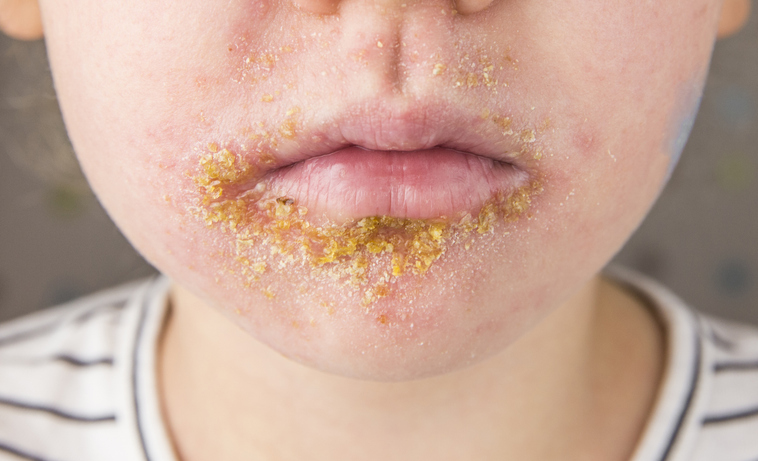
Other symptoms may include:
- Itching or mild soreness
- Redness around the affected area
- Spreading patches of crusted skin
Bullous impetigo, a less common form, involves larger fluid-filled blisters that may appear on the arms, legs or trunk. These blisters tend to stay intact longer than typical impetigo sores and can rupture suddenly, leaving behind raw, red skin that may be uncomfortable for your child.
How is impetigo treated?
Fortunately, impetigo is easily treatable, and most children recover quickly once treatment begins. Your pediatrician will choose the optimal approach based on the severity and extent of the infection.
“For smaller, contained areas, your pediatrician may prescribe a topical antibiotic ointment or cream that targets the staph and strep bacteria responsible for the infection,” said Dr. Kouyoumdji. “If the rash covers a larger area, keeps returning or isn’t improving with topical medication, they may recommend an oral antibiotic.”
It’s also important to keep the skin around the affected area clean. Gently washing the area with warm water and mild soap helps remove crusts, allowing the medicine to work more effectively. With proper treatment, most children start to feel better and see improvement within just a few days.
How can I keep impetigo from spreading at home?
Because impetigo is so contagious, good hygiene is key:
- Wash your hands frequently, especially after touching the affected skin
- Keep your child’s nails trimmed to reduce scratching
- Cover open sores with gauze or a light bandage
- Avoid sharing towels, washcloths, clothing or bedding
- Change pillowcases and towels daily until the infection clears
Most children can return to school or daycare 24 hours after starting antibiotics, as long as the sores can be covered and they feel well enough to participate.
When should I call the doctor?
“Reach out to your child’s pediatrician if the rash is spreading quickly, your child develops a fever or seems unwell or the sores aren’t improving after two to three days of treatment,” said Dr. Kouyoumdji. “It’s also important to call if the skin becomes swollen, warm or painful, as these can be signs of a deeper infection that needs prompt attention.”
Impetigo can spread fast, but with early recognition and proper treatment, it’s very manageable. Keeping an eye on minor scratches or bug bites, encouraging good hygiene habits and seeking care when needed can help keep infections from getting out of hand.
Talk to your pediatric care team if you’re concerned about a rash that’s getting worse or not responding to home care. They are here to help your child heal comfortably and safely.