
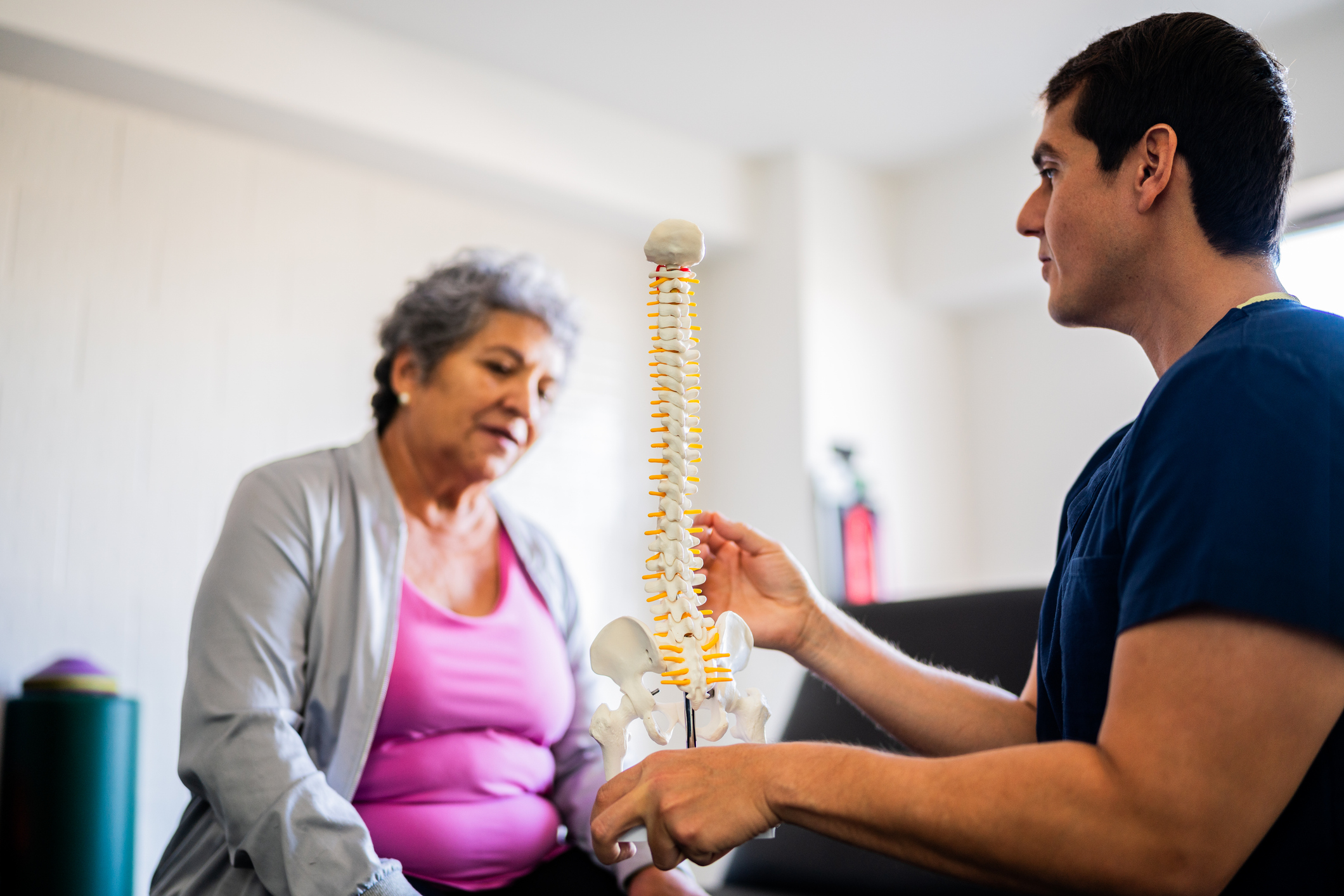


Because the symptoms can mimic routine back pain or sciatica, catching it early is essential to protecting your mobility and quality of life.
What is spinal stenosis?
“Spinal stenosis happens when the open spaces in the spine narrow, often due to age-related changes such as arthritis, disc degeneration or thickened ligaments,” said Karthik HS Madhavan, MD a neurosurgeon with Cooper Inspira Neuroscience. “As the space tightens, nerves in the lower back can become compressed, leading to pain, tingling, numbness or weakness that may radiate into the legs.”
Some people develop stenosis gradually and mistakenly view their symptoms as a normal part of aging, but it’s important to pay attention to how your back and legs feel over time.
How is spinal stenosis different from routine back pain or sciatica?
Stenosis often causes discomfort that worsens with standing or walking for long periods and improves with sitting or bending forward. Many people notice heaviness, fatigue or weakness in the legs, making it difficult to walk long distances.
While sciatica typically causes sharp, shooting pain down one leg due to a single irritated nerve root, spinal stenosis may affect both legs and can lead to numbness, tingling or balance issues. Over time, these symptoms may interfere with your daily activities and mobility.
What symptoms should I consider red flags?
These symptoms suggest that back pain may be more than a muscular issue and deserve prompt attention:
- Pain, numbness or tingling that radiates into one or both legs
- Leg weakness or difficulty lifting the feet
- Trouble with balance or walking longer distances
- Pain that is relieved by sitting or leaning forward
- Loss of bladder or bowel control, which is rare but requires immediate care
If your symptoms interfere with daily movement or continue to worsen, it’s time to see a specialist.
When is imaging needed?
“An MRI or CT scan is often recommended when symptoms persist or worsen, particularly when leg weakness, numbness or significant mobility issues are present,” said Dr. Madhavan. “Imaging helps confirm the diagnosis, rule out other causes of nerve compression and guide the most effective treatment plan.”
Your doctor may suggest imaging if conservative strategies aren’t helping or if your symptoms suggest more advanced nerve involvement.
How is spinal stenosis treated without surgery?
Most people begin with nonsurgical care, which can significantly reduce symptoms. Physical therapy can improve posture, flexibility and core strength, relieving pressure on the nerves. Anti-inflammatory medications may offer short-term relief, and steroid injections can decrease inflammation around the nerves. Activity modification, such as limiting prolonged standing, can also help manage symptoms and improve walking ability.
When is surgery recommended?
Your doctor may recommend surgery if nerve compression is causing ongoing weakness, balance issues or trouble walking, or if conservative treatments have not improved symptoms. Common procedures include:
- Laminectomy (decompression): Removes a small portion of bone or ligament to relieve pressure on the spinal nerves
- Minimally invasive decompression: Uses smaller incisions and specialized tools to decompress nerves with less tissue disruption and a faster recovery
- Fusion: Connects two or more vertebrae with bone grafts or hardware to stabilize the spine when added support is needed
Your doctor will evaluate the severity of nerve compression, your overall health and your goals to determine the best surgical approach.
Why early evaluation matters
“Spinal stenosis is highly treatable, especially when caught early,” said Dr. Madhavan. “Ignoring symptoms can allow nerve compression to progress, potentially leading to worsening weakness or long-term mobility issues.”
If you notice persistent back pain paired with leg symptoms or balance changes, don’t wait to get evaluated. Early diagnosis and treatment can help protect your mobility, comfort and quality of life.