


Tommy John surgery, also known as UCL reconstruction, can help throwing athletes recover from...
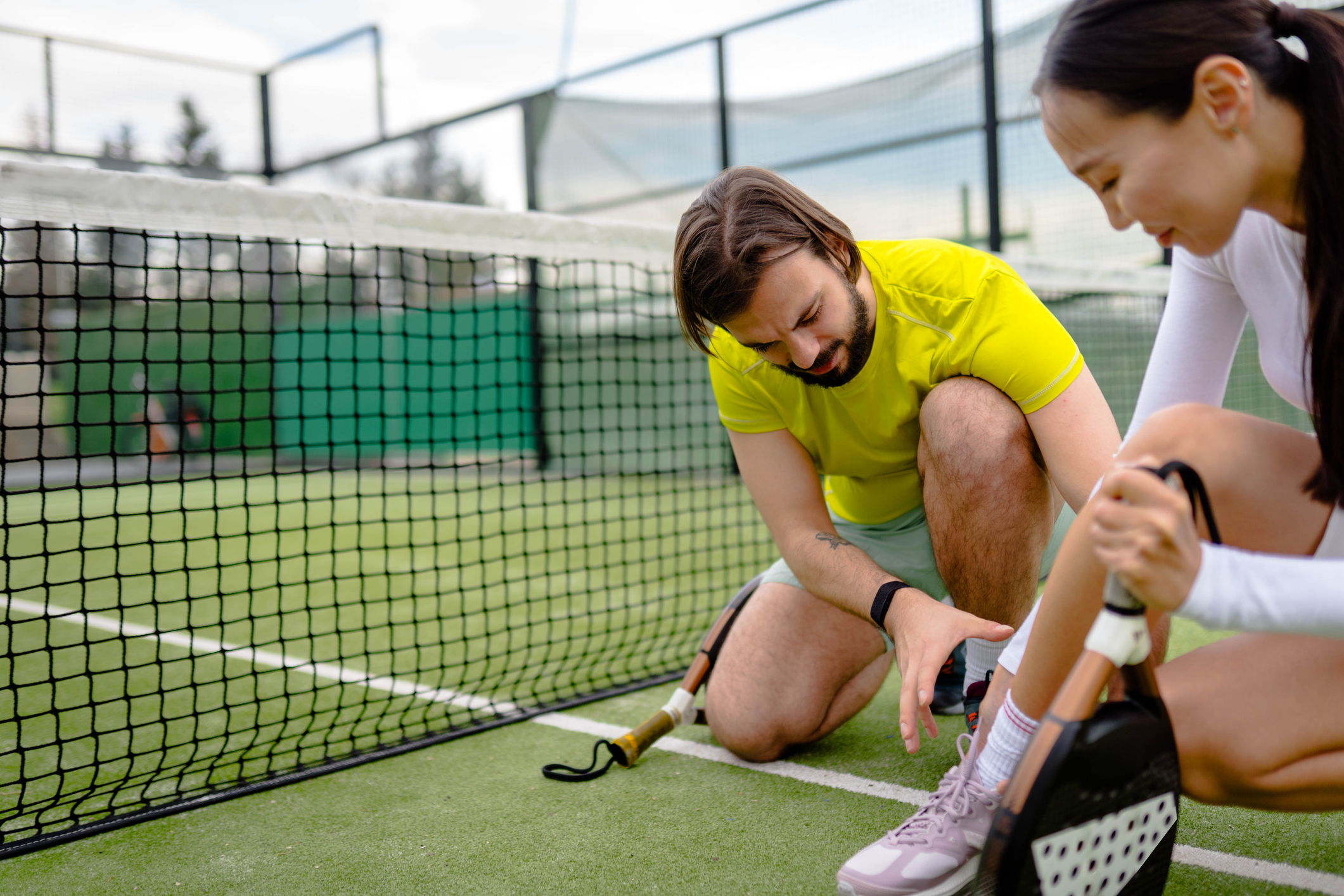
Racket sports like tennis, pickleball and padel are fantastic ways to stay active and have fun, but the sudden starts, stops and powerful swings that make these games so exhilarating also put stress on your body.
Here are some common racket-sport injuries and simple strategies to keep ankles, elbows, shoulders and knees strong and pain-free:
Rapid changes of direction, lunges and jumps often lead to awkward landings, and that’s when the ligaments on the outside of your ankle can overstretch or tear. “To help prevent ankle rolls, try building strength in the muscles along the outside of your lower leg and practicing balance exercises, like standing on one foot or using a balance board,” said Charles Scapellato, PT, MPT Inspira Sports Rehab Care. “These simple moves train your body to react quickly and stay steady during quick changes on the court.” Also, pick shoes designed for lateral stability and shock absorption, especially if you play on unforgiving hard courts.
Pain on the outside of your elbow after gripping a racket or even lifting a coffee mug is usually from repetitive wrist-extension motions that overload the forearm’s extensor tendons. To reduce your risk, ensure your racket’s grip size fits your hand and warm up with gentle wrist flexion and extension stretches—bending your hand down toward your forearm and then lifting it toward the ceiling—and slowly build up your playing time so your tendons have time to adapt.
When powerful strokes in pickleball or heavy backhands in padel cause pain on the inside of the elbow, the culprit is the flexor tendons. Counteract that by balancing your forearm workouts, including both wrist-curl and reverse-curl moves, and consider a vibration-dampening over grip to soften the sting of the ball’s impact.
Protect your shoulders with strengthening exercises to prevent rotator cuff issues. “Use a stretch band to gently rotate your arm outward and practice lifting your arm as if you’re tipping out an empty can,” said Megan McLaughlin, MSPT, Inspira Sports Rehab Care. “Follow that with exercises that help your shoulder blades glide smoothly, such as sliding your arms up a wall or lifting your arms while lying face-down.” Work on a smooth serve motion by avoiding dropping your arm too late or stopping your swing abruptly, which can keep extra stress off your shoulder.
A mishit at the edge of your racket face can send a jolt up your wrist, and repeated back-and-forth shots can inflame the extensor or flexor tendons. Strengthening with hammer curls and gentle wrist-twist exercises makes the wrist more resilient, and drilling centered-ball contact can help you keep the ball in the central area of your racket, where it’s less likely to affect your wrists.
The twisting forces of groundstrokes and serves can strain your lumbar spine if your core and hips aren’t pulling their weight. Exercises like planks, side planks and bird dogs help protect your spine. Dynamic hip-openers, such as lunges with a twist or yoga poses like the pigeon pose, help your hips absorb rotation and leave your lower back feeling supported.
“Hard surfaces combined with repeated lunges and sprints can irritate the patellar tendon or wear down cartilage,” said Scapellato. “You can counter this problem by strengthening the quads and glutes with squats, step-downs and hip thrusts to help absorb shock.” Give your joints a break as well by cross-training in low-impact activities like swimming or cycling.
By incorporating simple strengthening, mobility and technique tweaks into your routine, you’ll keep your body firing on all cylinders and spend more time ruling the court—and less time rehabbing on the sidelines. Lace up, warm up and play with confidence.
Learn more about physical therapy and rehabilitation services at Inspira.
Tommy John surgery, also known as UCL reconstruction, can help throwing athletes recover from...

A stroke took away Terry’s ability to read, speak clearly and walk on her own. She was certain her...
When a torn ACL kept student-athlete Penny Floyd on the sidelines, Inspira Rehabilitation Services...