


THC edibles can look like candy, making accidental ingestion a growing concern for families. Learn...
When the weather turns cooler, kids start bundling up and sharing hats, coats and scarves. Unfortunately, that also means head lice can make an unwelcome comeback.
Lice infestations are common, highly treatable and nothing to panic about. Here’s what parents should know about how lice spread, how to treat them effectively and how to prevent them from coming back.
“Head lice are tiny, wingless insects that live on the scalp and feed on small amounts of blood,” said Amanda Deal, D.O., a primary care physician with Inspira Health. “They lay eggs called nits, which attach firmly to the hair shaft near the scalp.” Lice are about the size of a sesame seed and can cause intense itching, but they do not spread disease.
Lice can’t fly or jump; they crawl. That means they spread mainly through direct head-to-head contact, making children in close settings, such as schools, sleepovers or sports practices, more likely to catch them.
Lice spreads most easily when children share personal items that come into contact with hair, such as hats, helmets, hairbrushes, headphones or pillows. The bugs can survive for about one to two days on surfaces like bedding or clothing, but they can’t live long without a human host.
While it’s common for parents to associate lice with poor hygiene, that’s a myth. Lice don’t discriminate—they can affect anyone, regardless of how clean their hair is.
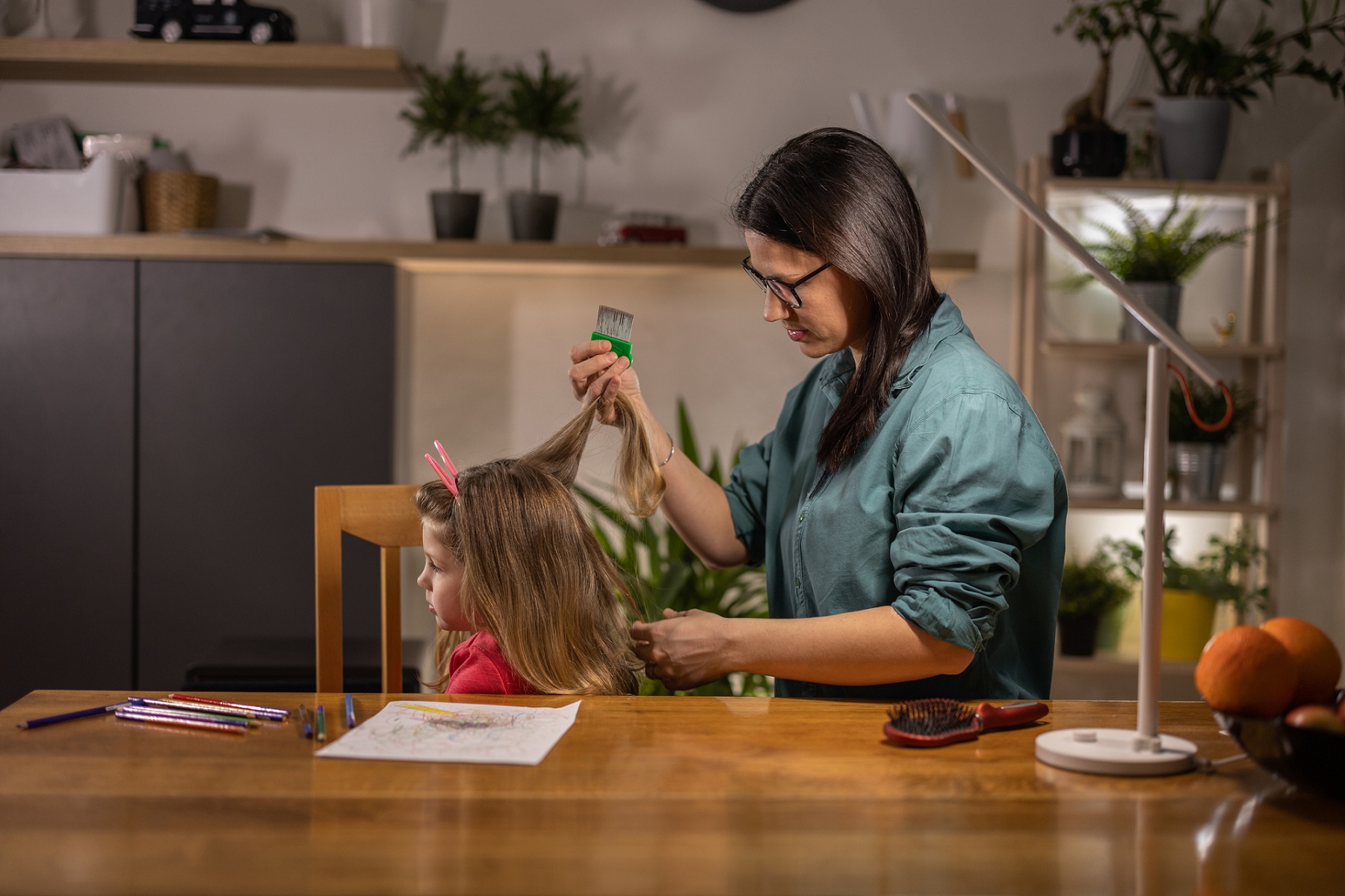
The most common sign is itching, especially around the scalp, behind the ears and at the nape of the neck. You may also notice small red bumps or a tickling sensation. The best way to confirm lice is by examining the scalp closely under bright light and parting the hair section by section.
Most cases can be treated at home using over-the-counter (OTC) lice shampoos or lotions that contain permethrin or pyrethrin, insecticides that work by paralyzing and killing live lice. Be sure to follow the directions exactly and repeat the treatment in about seven to 10 days to kill any newly hatched lice.
“After treatment, use a fine-tooth comb to remove remaining lice and nits,” said Dr. Deal. “Wash bedding, hats and recently worn clothing in hot water (at least 130°F) and dry them on high heat.” Items that can’t be washed can be sealed in a plastic bag for two weeks to ensure all lice are dead.
If OTC treatments don’t work, your pediatrician may recommend prescription medications that are stronger and safe for children.
A few simple habits can make a big difference:
Avoid sharing personal items that come into contact with the head or hair
Encourage kids to keep hats, scarves and hoodies to themselves
Lice may be pesky, but they’re perfectly manageable with the right approach. Early detection, treatment and a few preventive steps can stop lice in their tracks and keep your family itch-free all season long.

THC edibles can look like candy, making accidental ingestion a growing concern for families. Learn...
Although cannabis is now legal in New Jersey, consuming too much or mixing it with other substances...

Tailgates, concerts and sporting events bring excitement, but they can also pose real safety risks...