
Recovering after limb loss involves more than healing from surgery. With the right rehabilitation...
Read More
Cubital tunnel syndrome can make everyday tasks, such as gripping, typing or lifting, painful and frustrating. With proper treatment, most people find lasting relief and regain strength and function in the hand and arm.
Cubital tunnel syndrome is a condition caused by pressure or stretching of the ulnar nerve, which runs along the inside of the elbow. This nerve controls sensation in the ring and little fingers and helps power muscles in the hand. When compressed, it can cause tingling, numbness, pain or weakness that interferes with daily activities and athletic performance.
Cubital tunnel syndrome can be described as mild, moderate or severe based on the intensity of symptoms and the degree of nerve function impairment.
The condition often develops gradually from repetitive elbow bending, leaning on the elbow for long periods or keeping the elbow bent while sleeping. It can also be caused by an injury, arthritis or abnormal bone growth that narrows the cubital tunnel, trapping the nerve.
Symptoms may appear gradually and worsen with repeated elbow bending or pressure on the nerve. They often affect the ring and pinky fingers, as well as grip strength. Symptoms may include:
Your doctor will begin with a physical exam and may perform a cubital tunnel syndrome test, gently bending or tapping your elbow to check for tingling or numbness. They may perform a nerve conduction test, which measures how quickly signals travel along the ulnar nerve, or an electromyogram (EMG), which records muscle activity, to detect nerve irritation or damage. Together, these tests confirm the diagnosis and help determine severity.


Stretching and strengthening exercises for the arm and hand can improve flexibility, reduce pressure on the nerve and prevent stiffness.

Avoiding repetitive elbow bending, reducing pressure on the elbow and adjusting sleep positions can help alleviate irritation to the ulnar nerve.
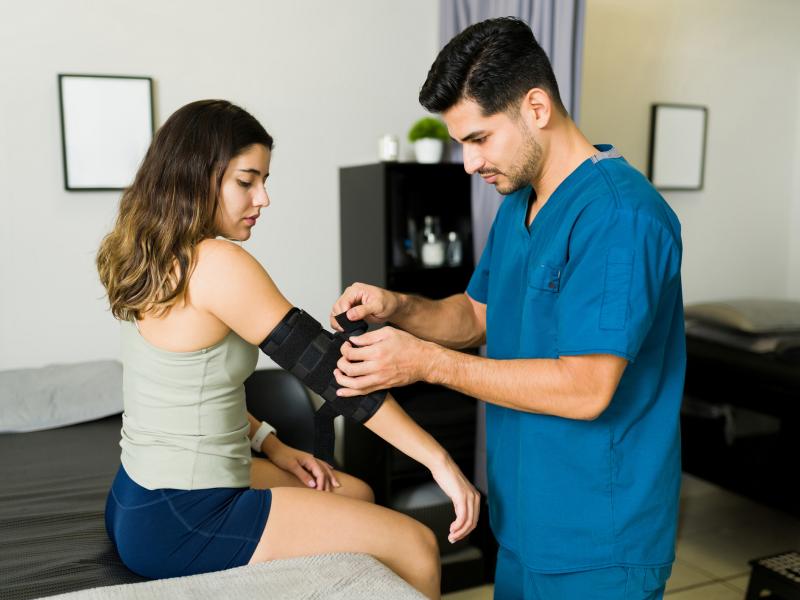
Your doctor may recommend a nighttime brace or splint to keep the elbow in a straight position during sleep, reducing nerve compression.

Anti-inflammatory medications can relieve pain and swelling. In some cases, corticosteroid injections may be used to treat more severe inflammation.

These specialized movements are designed to help the ulnar nerve move more freely within the cubital tunnel, reducing irritation.
At Inspira, we understand how disruptive cubital tunnel syndrome can be to daily life, from simple tasks like typing to athletic performance. Our process begins with a thorough evaluation to understand the cause of your symptoms. We then develop a personalized treatment plan that may include bracing, therapy and activity modifications to relieve pressure on the ulnar nerve.
For patients requiring advanced care, our rehabilitation specialists work closely with our orthopedic team to ensure seamless management, including surgical treatment when necessary. Therapy focuses on restoring strength, flexibility and fine motor control, allowing you to regain comfort and function. With access to certified specialists and evidence-based therapies, we aim to help every patient regain confidence in their daily activities.

Recovering after limb loss involves more than healing from surgery. With the right rehabilitation...
Read More
When Gina noticed her daughter Francesca wasn’t hitting her gross motor milestones, she turned to...
Read More
Sports medicine and physical therapy both play vital roles in injury recovery, but they serve...
Read More
Learn more about our online scheduling and schedule an appointment with your primary care provider today.

We offer a wide variety of services at our many locations throughout New Jersey, including award-winning obstetrics and gynecology, cancer care and orthopedics.

World class care is in your backyard. Learn more about our local and nationally renowned physicians.