
A stroke took away Terry’s ability to read, speak clearly and walk on her own. She was certain her...

A sprained ankle can make every step painful, causing swelling and bruising and making it difficult to walk. With proper treatment and rehabilitation, most people regain strength, balance and confidence in their ankle movement.
A sprained ankle happens when the ligaments that support the joint are stretched or torn, usually after the foot rolls or twists unexpectedly. This can cause pain, swelling, bruising and difficulty bearing weight. The most common type is an inversion sprain, when the foot rolls inward and the outer ligaments are injured.
Sprains often happen during sports, exercise or walking on uneven ground. Risk factors include poor balance, weak ankle muscles or a history of previous sprains, which can make the joint less stable. Even simple activities, such as missing a step or landing awkwardly, can lead to a sprain if the ligaments are overstressed.
Sprained ankle symptoms can range from mild discomfort to severe pain and instability, depending on the extent of ligament damage. Pain typically appears immediately after the injury and may worsen when standing or walking. Symptoms may include:

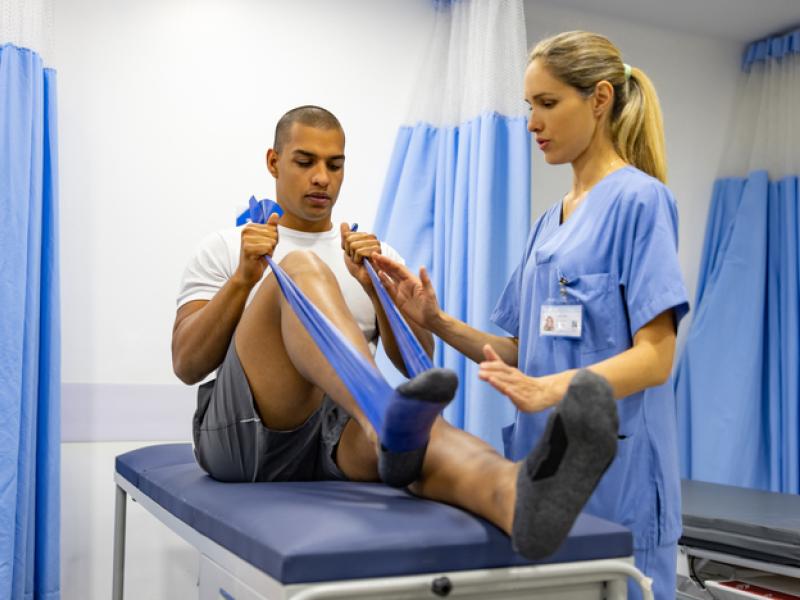
Therapy focuses on stretching, strengthening and balance exercises to restore flexibility and prevent future sprains and strains. Therapists may also use manual therapy or proprioceptive training to improve stability and coordination.

For severe or chronic cases, your doctor may recommend regenerative therapies, injections or rarely surgery to repair torn ligaments or address persistent instability.

Applying ice packs and using a compression bandage can help reduce swelling, bruising and discomfort in the early stages of healing.

Keeping the foot elevated above heart level and taking anti-inflammatory medications can relieve pain and minimize swelling.

Ankle braces or taping provide additional stability and help prevent reinjury, especially during the early stages of recovery or return to sport.

A guided, progressive return-to-activity plan helps ensure the ankle is strong and stable before resuming sports or high-impact exercise.
Avoiding weight-bearing and strenuous activity gives the injured ligaments time to heal. Using crutches or a walking boot may help reduce strain on the ankle during the recovery process.
At Inspira, we take a comprehensive approach to treating ankle sprains—addressing not only the immediate injury but also the underlying factors that affect balance and stability. Our care begins with a detailed evaluation to determine the severity of the sprain and identify any ligament or tendon involvement. From there, our team creates a personalized treatment plan that may include bracing, therapy and progressive strengthening to restore mobility and prevent future injury.
Our Physical therapists use evidence-based rehabilitation techniques, including balance retraining, proprioceptive exercises and manual therapy, to enhance joint control. For athletes and active individuals, we offer customized return-to-play programs to help you safely regain confidence and peak performance. Whether your goal is to walk comfortably again or return to competitive sports, Inspira supports your recovery every step of the way.

A stroke took away Terry’s ability to read, speak clearly and walk on her own. She was certain her...

When a torn ACL kept student-athlete Penny Floyd on the sidelines, Inspira Rehabilitation Services...

Aphasia and dysarthria both affect communication, but aphasia impacts language while dysarthria...

Learn more about our online scheduling and schedule an appointment with your provider today.

We offer a wide variety of services at our many locations throughout New Jersey, including award-winning obstetrics and gynecology, cancer care and orthopedics.

World class care is in your backyard. Learn more about our local and nationally renowned physicians.